


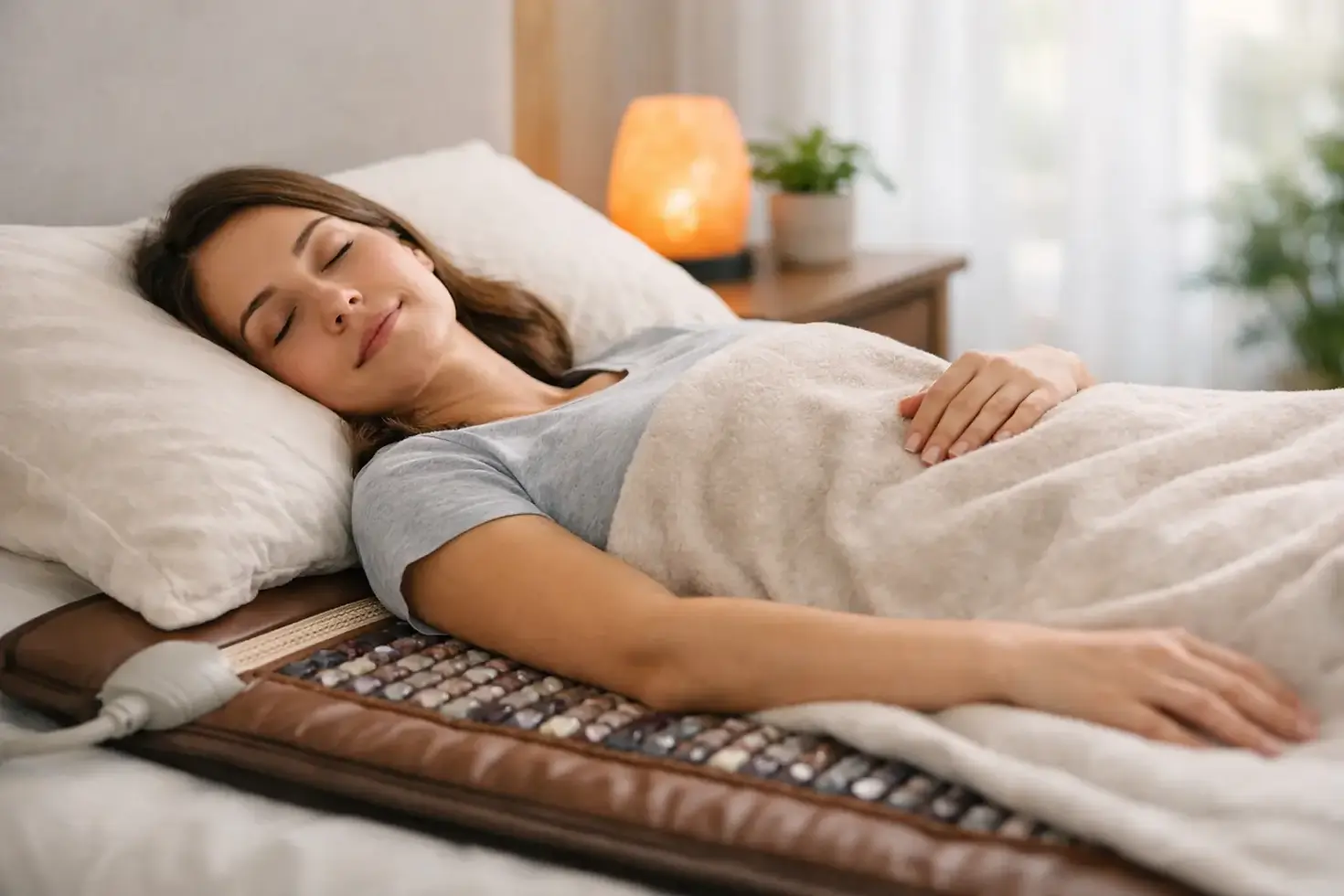
Can BioMat Help Sleep? What to Expect
- christina4811
- Jun 2
- 6 min read
Falling asleep tired but not truly settling into sleep is a frustrating pattern. If you have been asking, can BioMat help sleep, the better question is why your body may be resisting rest in the first place - tension, stress, discomfort, and poor nighttime regulation often show up together.
A BioMat is not a sleep pill, and it is not a cure for insomnia. What it can do is create conditions that may help the body relax more deeply before bed. For many wellness-minded adults, that matters because sleep problems are not always about the mind racing alone. Sometimes the issue is physical discomfort, a revved-up nervous system, or a bedtime routine that never gives the body a clear signal to power down.
Can BioMat help sleep by calming the body?
For many people, yes - that is the most realistic place to start. A BioMat uses far infrared heat, negative ions, and an amethyst crystal layer to support relaxation and temporary relief from muscle tension and everyday aches. When your shoulders are tight, your low back feels irritated, or your whole body still feels switched on at 10 p.m., falling asleep can feel harder than it should.
Gentle heat has long been part of nighttime recovery routines because it helps the body let go of that guarded, clenched feeling. Far infrared heat feels different from sitting on a standard heating pad. Rather than delivering only surface warmth, it is often described as a more penetrating, evenly distributed heat experience. That difference matters for people who want deeper comfort without feeling overheated on top.
If your sleep is disrupted by physical discomfort, this is where a BioMat may be most helpful. It may support relaxation before bed, help ease stiffness from long workdays or workouts, and make it easier to get comfortable enough to drift off naturally. That does not mean every user will have the same result. It means the mat may support the conditions that better sleep depends on.
Why sleep support is rarely just about sleep
People often shop for sleep solutions as if sleep exists in its own category. In real life, poor sleep tends to overlap with stress, recovery, pain, inflammation, travel fatigue, and hormone-related discomfort. If your body is carrying too much tension into the evening, no supplement, white noise track, or expensive mattress upgrade fully solves the root problem.
That is why wellness tools that focus on full-body relaxation can be so appealing. A BioMat is typically used as part of a broader self-care routine, not as a stand-alone fix. The goal is to help the body shift from alert mode into rest mode. For some people, that means using the mat 20 to 40 minutes before bed. For others, it means using it after exercise, after a stressful workday, or during periods when soreness is disrupting their normal sleep rhythm.
There is also a psychological effect worth acknowledging. Ritual matters. When you use the same calming tool at the same time each night, your nervous system begins to associate that period with winding down. The mat itself may support relaxation, but the consistency of the routine can be just as important.
How a BioMat may fit into a bedtime routine
The best sleep routines do not force sleep. They reduce interference. That is a subtle but important distinction.
Using a BioMat in the evening may help you step out of the overstimulated pace of the day. You lie down, the body warms gradually, muscles begin to release, and the nervous system gets a quieter signal than it receives from screens, late meals, or mental multitasking. Many people find that after a session they feel less restless and more ready for bed.
Temperature setting matters. More heat is not always better, especially close to bedtime. A moderate, comfortable setting is usually the better choice if your goal is calm rather than intense heat exposure. You want to feel soothed, not activated or sweaty. If you are new to infrared therapy, starting with shorter sessions is often the smartest move.
Hydration matters too. Infrared sessions can feel deeply restorative, but they are still a form of heat therapy. Drinking water before and after use is a simple step that supports comfort and recovery.
Some people use the mat directly before getting into bed. Others prefer using it an hour earlier so their body has time to settle naturally. It depends on your heat sensitivity, room temperature, and whether your sleep trouble is more about physical discomfort or mental overstimulation.
Can BioMat help sleep if pain is keeping you awake?
This is one of the strongest use cases. If temporary pain relief and reduced stiffness are part of what you need to fall asleep, a BioMat may be a meaningful addition to your home wellness setup.
Aching hips, tight lower backs, shoulder tension, arthritis-related discomfort, and post-workout soreness can all interfere with rest. You may feel tired enough to sleep but not comfortable enough to stay asleep. In that situation, the issue is not just sleep hygiene. It is the body asking for relief.
A premium infrared mat is appealing here because it supports two priorities at once - comfort and recovery. Instead of relying only on a pill, you are creating a more supportive pre-sleep environment. That is especially attractive for buyers who prefer non-pharmaceutical wellness tools and want something they can use consistently at home.
It is still important to stay realistic. A BioMat does not replace medical care, and it should not be framed as treating a diagnosed sleep disorder. But if soreness, stress, or tension are obvious contributors to poor sleep, using a mat designed for relaxation and temporary relief may help reduce those barriers.
What results are realistic?
The most trustworthy answer is that it depends on why you are not sleeping well.
If your main issue is muscular tension, evening stress, mild restlessness, or discomfort from everyday wear and tear, you may notice that a BioMat helps you feel calmer and more physically ready for sleep. Some users feel the benefit quickly because the sensation of warmth and release is immediate. Others need a few weeks of consistent use before they can tell whether their sleep routine is improving.
If your sleep problem is driven by untreated sleep apnea, severe insomnia, medication side effects, or a highly irregular schedule, the mat may still feel relaxing, but it may not address the root cause. That is not a weakness of the product. It is just an honest reminder that sleep is complex.
For premium wellness buyers, that honesty matters. The value of a BioMat is not that it promises magic. The value is that it offers a practical, repeatable, at-home way to support relaxation, recovery, and temporary relief - all of which can play a real role in better rest.
Why people choose a BioMat over a basic heating pad
If your goal is only to feel warm for ten minutes, a generic heating pad may seem like enough. But many shoppers looking into sleep support want more than a quick patch of surface heat.
A BioMat is usually considered by people who are building a more intentional wellness routine. They want a full-body experience, not a small rectangular pad they move from shoulder to hip all evening. They are interested in premium infrared technology, crystal-based construction, and a product that fits into stress relief, recovery, and sleep support at once.
That broader value matters when you are investing in your home wellness tools. A mat that supports bedtime relaxation may also be used after workouts, during flare-ups of stiffness, while reading, or as part of a regular recovery practice. For many households, that makes the purchase easier to justify because the benefit is not limited to one issue.
For customers comparing options, this is where product education becomes important. The right fit depends on how often you plan to use it, whether you want full-body or compact coverage, and how central sleep support is to your buying decision. A specialist retailer such as BioMat Canada can help buyers sort through those details with more confidence than a general marketplace listing ever will.
Getting more from your BioMat for sleep support
A BioMat works best when your routine supports it. Late-night scrolling, heavy meals right before bed, and inconsistent sleep hours can cancel out a lot of the calm you are trying to create. The mat should feel like part of a transition, not an isolated fix squeezed into a chaotic evening.
If you want the best chance of seeing sleep-related benefits, keep the routine simple. Use the mat at roughly the same time, choose a comfortable temperature, dim the lights, and let the session be quiet. You do not need a perfect wellness ritual. You just need enough consistency for your body to recognize that rest is coming.
That is the real answer to can BioMat help sleep. It may, especially when sleep is being disrupted by stress, soreness, tension, or a body that has forgotten how to slow down at night. When you give yourself a reliable space to relax and recover, better sleep often stops feeling so far away.


Comments