


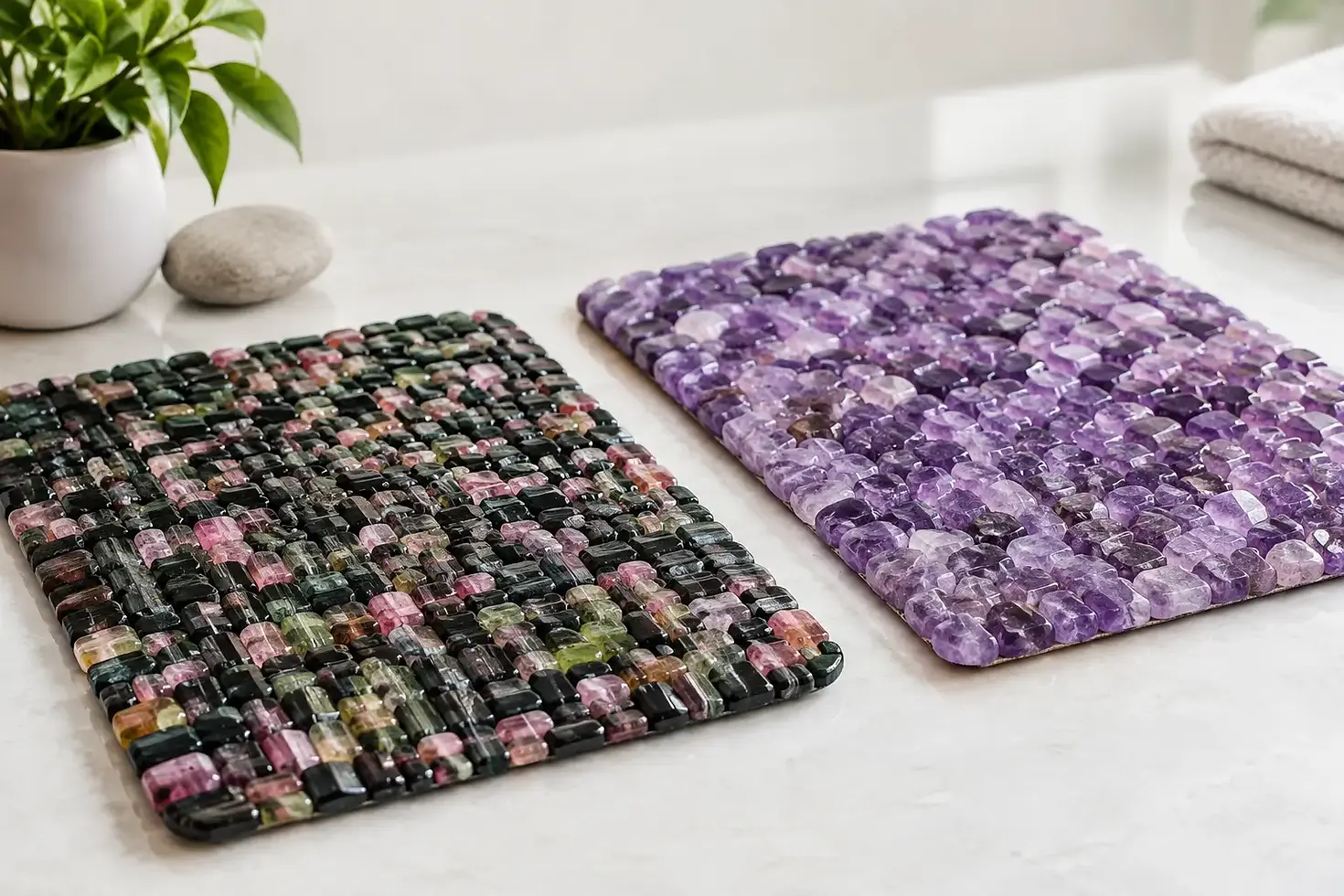
Tourmaline Versus Amethyst Mats: What Changes?
A mat can look impressive online and still be the wrong fit for your body, routine, or expectations. When comparing tourmaline versus amethyst mats, the real question is not which crystal sounds more powerful. It is how the mat produces warmth, how comfortably you can use it, and whether its construction supports the kind of recovery and relaxation time you want at home.
Both materials are popular in infrared wellness products because they are associated with far infrared heat and negative ion technology. Both can be part of a calming routine for sore muscles, stiffness, stress, and sleep preparation. The differences come down to the crystal blend, the way heat is delivered, the size of the treatment area, and the overall quality of the mat itself.
Tourmaline Versus Amethyst Mats: The Core Difference
Amethyst mats use amethyst crystal, often combined with additional materials such as tourmaline or jade, to create a broad, comfortable infrared experience. Amethyst is commonly chosen for larger home mats because its crystal structure works well across a wide surface, helping create the deeply relaxing warmth people expect from a premium infrared session.
Tourmaline mats feature tourmaline as a central component. Tourmaline is frequently discussed for its piezoelectric and pyroelectric properties, meaning it can develop an electrical charge under pressure or temperature changes. In wellness marketing, it is also valued for its association with negative ions and far infrared heat.
That does not mean every tourmaline mat performs the same way, or that an amethyst mat is automatically less effective. Crystal type is only one part of the picture. Heating elements, temperature control, EMF design, material quality, crystal quantity, size, safety certifications, and warranty support can have a much greater effect on the ownership experience.
What You May Notice During a Session
Many people describe the feeling of an amethyst infrared mat as steady, enveloping, and restorative. Because full-size amethyst mats are designed to support the body from shoulders to feet, they are often used for whole-body relaxation after a demanding day, a workout, travel, or long periods of sitting.
A tourmaline-focused mat may appeal to someone who wants a targeted session or prefers a different crystal composition. Depending on the product, tourmaline may be used in a smaller pad, layered into a larger mat, or blended with other stones. The experience can still be warm and soothing, but the coverage and heat distribution depend on the exact construction.
Temperature matters more than many shoppers realize. Higher heat is not always better. A quality mat should give you control, allowing you to choose a gentle setting for winding down or a warmer session when your muscles feel particularly tight. The most beneficial setting is usually the one you can use consistently and comfortably, not the highest number on the controller.
Why Full-Body Coverage Can Change Your Routine
If your goal is occasional comfort for one small area, a compact tourmaline pad may be enough. It can be convenient for the lower back, shoulders, abdomen, knees, or feet. Smaller mats also take up less space and can be easier to carry between rooms.
For people dealing with widespread tension, restless sleep, post-exercise fatigue, or a daily need for quiet recovery time, a full-size amethyst mat can be a more practical investment. You can lie down, let your body settle, and use the session as a dedicated reset rather than trying to reposition a small pad from one area to another.
This is one reason the Richway Amethyst Infrared BioMat line is often considered by serious home wellness buyers. The Professional BioMat 7000mx is designed for full-body use and combines amethyst and tourmaline within a premium infrared system. It is not simply a heated blanket with crystals added for appearance. It is built for repeatable, intentional wellness sessions.
Crystal Claims Need Context
Crystal technology can be meaningful, but it should never replace common sense. An infrared mat is a wellness tool, not a cure for an illness, injury, or chronic condition. It may support relaxation and temporary relief of minor muscle and joint discomfort, but it is not a substitute for medical diagnosis or treatment.
Be especially cautious when a low-cost product makes dramatic promises without explaining its heating system, crystal content, electrical design, or safety features. Some mats use a very thin scattering of crushed stone, while others use substantial crystal layers. A listing may say “tourmaline” or “amethyst” without telling you how much of that material is actually present.
Ask better questions before you buy. Is the crystal material clearly identified? Does the mat offer adjustable temperature settings and an automatic shutoff? Is there a meaningful manufacturer warranty? Can the seller help with repairs, replacement accessories, and product guidance after the sale? Premium wellness equipment should come with premium support.
Choosing Between Tourmaline and Amethyst
Your decision should begin with how you intend to use the mat. A tourmaline option can make sense when portability, spot treatment, or a smaller budget is the priority. It may be a useful addition to a desk chair, recliner, bed, or travel routine, provided the product is safely made and comfortable to use.
An amethyst mat is often the stronger choice for people building a consistent home wellness practice. The larger surface can support a more complete rest period, whether you are looking to release daily tension, prepare for sleep, or create a calmer recovery ritual after activity. For many households, a full-size mat is also easier to share between partners or family members.
There is also a middle ground. A mini mat may offer enough room for the back, hips, or legs while remaining easier to store than a professional full-body model. If you are unsure whether you will use a mat regularly, consider where it will live in your home. The mat that stays accessible is far more likely to become part of your routine.
Do Not Overlook Build Quality and Support
A wellness mat is an electrical product you may use several times a week for years. The controller should feel intuitive, the surface should be durable, and the heat should remain stable across the usable area. Premium materials matter, but so do thoughtful details such as flexible construction, reliable connections, timer options, and instructions you can actually follow.
Warranty and repair access also deserve attention. A bargain mat can become expensive if it fails and there is no way to replace a controller, cord, or cover. Buying from a specialized retailer gives you a clearer path to product education and post-purchase support, which is especially valuable when choosing a higher-ticket infrared mat.
Before your first session, read the user guide and begin at a low setting. Stay hydrated, avoid falling asleep on a high heat setting, and check with a qualified healthcare professional if you are pregnant, have a medical condition, use implanted electronic devices, or have concerns about heat exposure. A careful start helps you learn what feels restorative for your body.
The best choice is the mat that fits your space, encourages regular use, and gives you confidence in what you are bringing into your home. Whether you prefer tourmaline, amethyst, or a thoughtfully engineered blend of both, make room for a ritual that lets your body slow down and recover on its own terms.


Comments